


Hey there, baking enthusiasts! As a supplier of kitchen measuring tools, I often get asked about the accuracy of kitchen measuring spoons, especially when it comes to baking powder. It's a crucial question because the right amount of baking powder can make or break your baked goods. So, let's dive right in and explore how accurate these little tools really are.
First off, let's understand why accuracy matters when it comes to baking powder. Baking powder is a leavening agent that helps your cakes, muffins, and biscuits rise. If you use too much, your baked goods can end up with a bitter taste, a strange texture, or they might even collapse. On the other hand, if you use too little, your treats might turn out flat and dense. So, getting the measurement just right is super important.
Now, let's talk about the factors that can affect the accuracy of kitchen measuring spoons for baking powder. One of the main things is the quality of the spoon itself. A well - made measuring spoon should have a consistent volume. Cheaper spoons might have irregular shapes or sizes, which can lead to inaccurate measurements. For example, if the spoon is warped or the edges are not straight, it can hold more or less baking powder than it's supposed to.
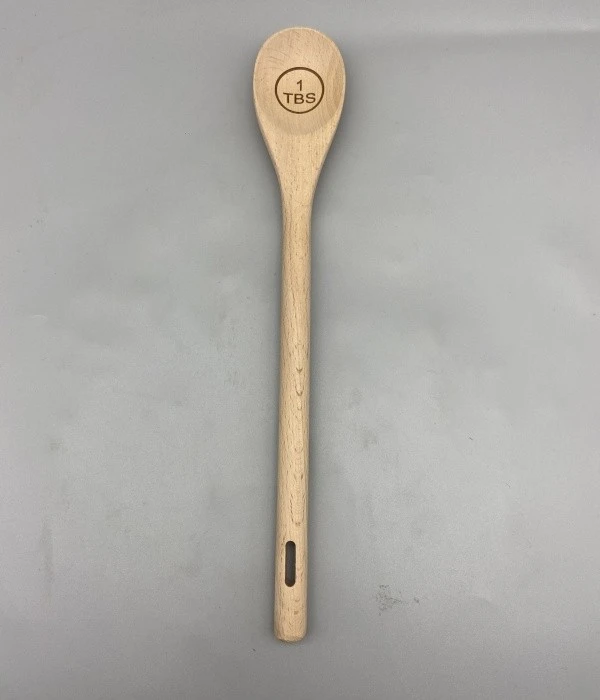
At our store, we offer high - quality measuring spoons like the Wooden Handle Measuring Spoons. These spoons are crafted with precision to ensure that each spoon holds the exact amount it's labeled for. The wooden handle not only adds a touch of elegance to your kitchen but also makes them comfortable to hold.
Another factor is how you measure the baking powder. The most accurate way is to use the "dip and sweep" method. You dip the spoon into the baking powder, then use a straight edge (like a knife) to sweep off the excess powder on top. This gives you a level spoonful, which is the standard measurement. However, many people just scoop the powder with the spoon, which can lead to over - measuring because the powder gets packed down.
It's also important to consider the consistency of the baking powder itself. Over time, baking powder can clump together, especially if it's exposed to moisture. Clumped baking powder can be difficult to measure accurately. You might end up with a spoonful that has a big clump, which means you're getting more powder than you think. To avoid this, you can sift the baking powder before measuring it. This breaks up the clumps and gives you a more consistent powder for accurate measurement.
We also have a Wooden Coffee Measuring Spoon that can be used for measuring small amounts of baking powder. It's perfect for those recipes that call for just a pinch or a small amount. The wooden material is non - reactive, so it won't affect the taste of your baking powder.
Now, let's talk about the difference between measuring spoons and other measuring tools. Some people might think that using a scale would be more accurate for measuring baking powder. While a scale can give you a very precise weight measurement, measuring spoons are still a popular choice in the kitchen. They're quick and easy to use, and most recipes are written in terms of spoonfuls.
However, if you're really serious about accuracy, you can use both. First, measure the baking powder with a spoon, then weigh it on a scale to double - check. This way, you can get the best of both worlds.
The environment can also play a role in the accuracy of measuring spoons. For example, if it's a very humid day, the baking powder might absorb moisture from the air, making it clump and harder to measure accurately. In this case, you might want to store your baking powder in an air - tight container and measure it as soon as you open it.
Our Wooden Measuring Cup Set can also be used in conjunction with the measuring spoons. If you have a recipe that calls for a larger amount of baking powder, you can use the measuring cups to get a more accurate volume measurement.
In conclusion, kitchen measuring spoons can be very accurate if you choose the right ones and use them correctly. By following the proper measuring techniques, using high - quality spoons, and taking into account the factors that can affect accuracy, you can ensure that your baked goods turn out perfectly every time.
If you're in the market for reliable and accurate kitchen measuring tools, we'd love to hear from you. Whether you're a professional baker or just someone who loves to bake at home, our products are designed to meet your needs. Contact us to start a procurement discussion and take your baking to the next level.

References
- "The Science of Baking" by Peter Reinhart
- "Baking Basics: Measuring Ingredients" - Various online baking blogs and resources