


As a supplier of bamboo kitchen utensils, I often get asked if these eco - friendly alternatives are prone to warping. It's a valid concern because no one wants their kitchen tools to lose their shape after just a few uses.
Let me start by saying that bamboo is an amazing natural material. It's strong, renewable, and has a beautiful aesthetic that makes it a popular choice for kitchenware. But like any natural material, it does have its quirks, and warping can be one of them.
Reasons Why Bamboo Kitchen Utensils Might Warp
Moisture Exposure
One of the main culprits behind bamboo warping is moisture. Bamboo is a porous material, which means it can absorb water. When it absorbs water unevenly, different parts of the bamboo expand at different rates. This uneven expansion creates stress within the material, leading to warping.
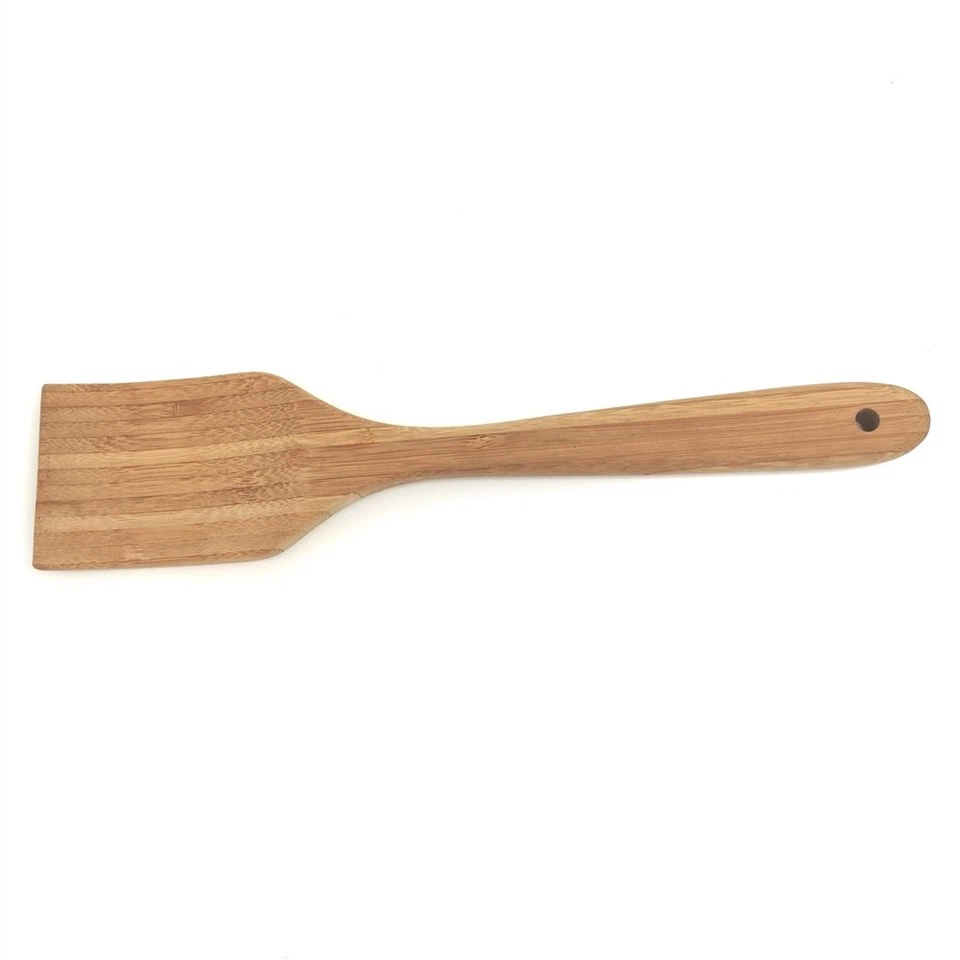
For example, if you leave a bamboo spatula soaking in a sink full of soapy water for hours, the part that's fully submerged will absorb more water compared to the part that's sticking out of the water. Over time, this can cause the spatula to bend or twist.
Another common scenario is when you wash bamboo utensils in the dishwasher. The high - pressure water jets and long cycles in a dishwasher can expose the bamboo to excessive moisture. Plus, the heat from the drying cycle can cause the bamboo to dry out too quickly, further increasing the risk of warping.
Temperature Changes
Extreme temperature changes can also take a toll on bamboo kitchen utensils. If you move a bamboo cutting board from a cold refrigerator to a hot kitchen countertop, the rapid change in temperature can cause the bamboo to expand or contract suddenly. This sudden change in size can lead to warping.
Similarly, placing a bamboo utensil too close to a hot stove or in direct sunlight for an extended period can cause the outer layers of the bamboo to dry out faster than the inner layers. This uneven drying can create internal stress and result in warping.

How to Prevent Bamboo Kitchen Utensils from Warping
Proper Cleaning
The way you clean your bamboo kitchen utensils plays a huge role in preventing warping. Instead of soaking them in water for long periods, it's best to wash them by hand with warm, soapy water. Use a gentle sponge or cloth to clean the utensils, and then rinse them quickly.
After rinsing, dry the utensils thoroughly with a clean towel. Make sure to get into all the nooks and crannies to remove any excess water. Avoid leaving them wet or damp, as this can encourage moisture absorption and warping.
Storage
Proper storage is also key. Store your bamboo kitchen utensils in a dry place. Avoid storing them in areas with high humidity, like near the sink or in a damp basement. If possible, keep them in a cabinet or on a dry countertop.
You can also consider using a utensil holder or rack that allows air to circulate around the utensils. This helps to prevent moisture buildup and keeps the bamboo dry.
Conditioning
Regularly conditioning your bamboo kitchen utensils can help keep them in good shape. You can use food - grade mineral oil or beeswax to condition the bamboo. Apply a thin layer of the oil or wax to the utensils using a clean cloth. Let it soak in for a few hours or overnight, and then wipe off any excess.
Conditioning the bamboo helps to seal the pores, making it more resistant to moisture and reducing the risk of warping. It also gives the bamboo a nice shine and can extend the lifespan of your utensils.
Our Organic Bamboo Cooking Utensils
At our supply, we take great care to ensure that our Organic Bamboo Cooking Utensils are of the highest quality. We source our bamboo from sustainable forests and use advanced manufacturing techniques to minimize the risk of warping.
Our manufacturing process includes pre - treating the bamboo to make it more stable. We also perform quality checks at every stage to ensure that only the best products reach our customers.
However, even with our best efforts, it's still important for our customers to take proper care of their bamboo kitchen utensils. By following the tips I've mentioned above, you can enjoy your bamboo utensils for a long time without worrying about warping.
Conclusion
So, are bamboo kitchen utensils prone to warping? The answer is that they can be, but with proper care and maintenance, the risk can be significantly reduced. Bamboo is a wonderful natural material that offers many benefits, such as being eco - friendly, durable, and beautiful.
If you're in the market for high - quality bamboo kitchen utensils, we'd love to be your supplier. We offer a wide range of products, from spatulas and spoons to cutting boards and bowls. Our products are not only functional but also add a touch of natural elegance to your kitchen.
If you're interested in purchasing our bamboo kitchen utensils or have any questions, feel free to reach out. We're always happy to discuss your needs and help you find the perfect products for your kitchen. Let's work together to make your kitchen a more sustainable and stylish place!
References
- Smith, J. (2020). The Guide to Natural Kitchenware. Kitchen Press.
- Green, A. (2019). Bamboo: A Sustainable Material for the Home. Home Living Journal.